-
Herşey Dahil Sadece 350 Tl'ye Web Site Sahibi Ol
Hızlı ve kolay bir şekilde sende web site sahibi olmak istiyorsan tek yapman gereken sitenin aşağısında bulunan iletişim formu üzerinden gerekli bilgileri girmen. Hepsi bu kadar.
-
Web Siteye Reklam Ver
Sende web sitemize reklam vermek veya ilan vermek istiyorsan. Tek yapman gereken sitenin en altında bulunan yere iletişim bilgilerini girmen yeterli olacaktır. Ekip arkadaşlarımız siziznle iletişime gececektir.
-
Web Sitemizin Yazarı Editörü OL
Sende kalemine güveniyorsan web sitemizde bir şeyler paylaşmak yazmak istiyorsan siteinin en aşağısında bulunan iletişim formunu kullanarak bizimle iletişime gecebilirisni
Lee CK
By Fitness ve Body Blogçusu at 00:00
Bodybuilder, Follow Friday, Lee CK, Malaysia, Posing Trunks, Selfie
No comments
Anne-Sophie Mutter on John Williams
By James Longstaffe
Presto Classical, Interview — August 29, 2019
Celebrated German violinist Anne-Sophie Mutter has long been both a dedicated commissioner of new works for the violin as well as an ardent fan of the music of composer John Williams; her new album combines these two facets by presenting a selection of Williams's movie themes from across the decades, specially reworked for violin and orchestra, and conducted by the composer himself.
Alongside well-loved melodies from films such as Star Wars, Harry Potter, Memoirs of a Geisha, and Schindler's List, the album presents a selection of music from rarer gems such as Dracula, Sabrina, Cinderella Liberty, and Far and Away. I spoke to Anne-Sophie recently to find out how she chose which films to include, as well as how she first encountered the music of John Williams.
James Longstaffe: It's clear from listening to the album how passionate an advocate you are of the music of John Williams, with your enthusiasm coming across so clearly in every piece: can you tell us how you first came across his music, and what made you fall in love with it?
Anne-Sophie Mutter: I fell in love with his music in 1978; I grew up in the Black Forest where Germany, France, and Switzerland meet and there was not much to do other than playing soccer and being in the woods and enjoying my violin lessons. We had a cinema, so at least that was something exciting! Then in 1978, shortly after I had made my debut with Herbert von Karajan, Star Wars arrived in the cinema, and I was totally blown away by the music. Although it was visually also sensational, what really stuck with me was the leitmotifs, the strong characters which he was able to depict in music. I was very struck by that because I grew up with the great music of people like Bernard Herrmann and Korngold, whose Violin Concerto and score for The Sea Hawk are obviously special. After that I used to go to movies when I knew that John would have written the score: sometimes I wasn't terribly interested in the subject, but I knew I could always close my eyes and know what was going on by just listening to this very rich-textured and stylistically diverse music.
I'm so envious of brass players; clearly John has a very soft spot for them, which made selection of the themes for my album and for the open-air concert quite demanding: Princess Leia, for example, wasn't originally intended for the violin, but as John himself says it becomes a totally different emotional experience.
Longstaffe: Of course you have a direct connection to Hollywood royalty through André Previn: I understand he used to tease Williams that he should stop wasting his time with all this film music and focus his efforts on so-called "serious" compositions instead. Do you think there is still a certain resistance to film music in the concert hall, and what do you think it is about Williams's music that has enabled it to make that transition more successfully than others?
Mutter: I think André probably would not have used the words "film music instead of serious music", because he himself lived in all these musical worlds which seem very different to most people: unlike many of us who are less gifted than he was, he lived in the world of music completely, so he could easily switch from jazz and film music to playing a Mozart piano concerto or conducting Richard Strauss. But I think the point André wanted to make is that John seems to be so totally busy with that part of the repertoire that his symphonic writing hasn't been given the space it deserves – though in fact he's composed about forty or fifty "classical" works, including two violin concertos and a cello concerto, and he's just written a piece for Yo-Yo [Ma], which premiered last summer in Tanglewood.
I think in English-speaking countries people are much more open-minded. Just over the weekend I was in London looking at the Casino Royale interactive screening, and it struck me how incredibly diverse the cultural scene in London is; my daughter has lived there for quite a while, and that kind of diversity and also appreciation for the theatre and musicals and opera seems to me to be very Anglo-Saxon. In Germany the division between the "serious" and the "unserious" is much more pronounced. So the reason I chose to do the first real open-air concert of John's music in Germany is not only because Germany is my home country: it also has to do with the reluctance that I think a big part of the audience has to accept that both worlds can have high craftsmanship. That is true for classical music as well as for film music, and there are fabulous new scores by John Williams as well as people like Jörg Widmann, so it is possible.
I'm always interested in enlarging my repertoire, and I have worked with so many living composers that when I came across John Williams in person I immediately thought "Wow, a violin concerto would be such a gift for the repertoire and for the next generation". Hopefully the moment will come when he has the time to address that issue, but for the time being I'm very happy with Markings [written for Anne-Sophie Mutter in 2017], which is also being recorded; it's not included on the CD, but will be released later on a special edition on LP. I cannot tell you how excited and honoured I am to be part of this project. It absolutely needs to be there because it's a fabulous piece; he takes it as seriously as everything else, and we wanted to take a broader look at how he treats the violin and its many different stylistic clothes.
Longstaffe: Alongside excerpts from Star Wars and Harry Potter it's great to see some less familiar works included on the album, particularly Cinderella Liberty, Dracula, and one of my favourite John Williams themes, Sabrina.
Mutter: Oh yes, Sabrina has a purity and it ennobles the film. One of my all-time favourites now is actually Cinderella Liberty; I just find Nice To Be Around [the love theme from the film] so immensely inspired, and the jazzy atmosphere is something which really taps into my passion for jazz. Sadly I've no talent for improvisation, but I've always thought that it is the most intelligent style of music-making – composing in the instant and being so responsive and so close to your musical partners and their musical ideas. One of André's gifts to me last Christmas was a special arrangement of Duke Ellington's Sophisticated Lady, and it was he who also suggested that we include Cinderella Liberty (which was a great surprise to me) and Dracula, which he remembered from decades ago and particularly admired.
Longstaffe: Several of the pieces have been fairly substantially reworked not just in terms of orchestration but also in form and structure. Did you have any involvement in the reshaping of these pieces, or any input into the solo part, perhaps for example, the cadenzas in Hedwig's Theme and Tintin?
Mutter: No, none whatsoever: John is such a perfectionist, and his knowledge of the violin is quite astounding, so there was simply no need. My only suggestion concerned Princess Leia's Theme, which was originally for French horn: I felt that the key didn't really exploit the brilliance and soaring quality of the violin, so I asked for it to be transposed upwards, so it could shine even more. I'm not 20 anymore, so I have worked with a lot of fabulous musicians and great composers, but still his understanding and knowledge and quest to be ever better is amazing. Sometimes I would complain slightly about passages which were uncomfortable or difficult... but I complained only to myself because Beethoven is uncomfortable and difficult too, and that's just part of being a musician; it's not supposed to be easy!
Longstaffe: Can you give us some insights as to what it's like to be part of a John Williams recording session, what his working methods are in the studio, and what qualities he brings as a conductor to his own music?
Mutter: First of all he trusts all of us, which is a great quality: not all conductors and composers do that when it comes to recording sessions. Many musicians these days, particularly the very young conductors, are too overly active, they don't trust you to play a phrase in the way it should unfold. John also rewrites constantly: even after our open-air concert in Tanglewood in July, he still rewrote a few sections, changing a few bars in the violin part of Dracula and a great deal of A Prayer for Peace [from Munich]. This project has been a long time in the making, because we started discussing it over two years ago, and he started to write just over a year ago; we rehearsed in March, we recorded in April, we performed in July, and he is still not finished with it! I am very intrigued by that and very in awe of the fact that although I find what he writes is perfect, he is going to go back and reset, re-orchestrate and rewrite. That's the sign of a real genius, and also obviously of a very humble person.
Longstaffe: Finally, with so many memorable themes that he has written across the decades, were there any particular favourites that you weren't able to fit on this album, and is there perhaps scope for a Volume Two? I would love to hear you play, for example, the Devil's Dance from The Witches of Eastwick!
Mutter: That's a very good question! I did play Devil's Dance in Tanglewood, and he's rewritten it to the extent that it's almost like a new piece. I'm going to perform it here in Munich soon, but he was in the process of rewriting it for me when we were recording in April, and I have to confess I was so overwhelmed by the 16 or 18 other pieces that I just wasn't able to get it ready – but Volume Two, who knows!
There are so many more themes I would have loved to play: some of them might never work out, like Catch Me if You Can, which I think is one of the best scores ever written. War Horse is so beautiful, and I would just love to play the main themes of Superman and Jurassic Park! I'm contemplating a world tour with John's music in 2022, when I've done more of these pieces, and I'm thinking I might just join the orchestra. There's such incredible intensity and depth and emotion that I don't want to only act as a soloist, I want to be part of the entire picture!
Source: prestomusic.com
Photos: Prashant Gupta / Deutsche Grammophon
The album "Across The Stars" released on August 30 by Deutsche Grammophon.
More photos
See also
The best new classical albums: September 2019
A Confrontation With Music: Ivo Pogorelich's First Album In 21 Years
An Introduction to Myrtle Emma
| Myrtle Emma Morris White |
Blog, ever since I started writing it about ten years ago I've had a few different purposes for it in mind. First, and most obviously, it's a place for me to write about the topics I'm learning about myself and to put the information out there for anyone else who might be interested in it. I was hoping that there was an intellectual market for it, and I've been thrilled, humbled, and grateful for the following I've had over the years. However, it's always had another purpose, and it's one of the reasons I like the blog (and Facebook) format.
Since the beginning, I've tried to make and allow the blog to be a forum, a gathering place, a place where everyone else can also contribute their own personal knowledge and ask their own questions about our local history. I've always been very excited whenever someone contacts me with an old picture of theirs, whether they know the whole story behind it or not. I've been honored to share the many guests posts that others have written for us. And frankly, over the last couple of years, I'd say that most of the post topics have come directly or indirectly from questions, comments, or suggestions from readers. This has been a very rambling way of saying that I have another such item to share with everyone -- one that will flow out through several posts spread out over the next few months. It's also one that I hope might inspire others like it.
A little while back I received an email from a woman named Rebecca White Rose, who said she had a book I might be interested in. She said that her mother, Myrtle Emma (Morris) White, had grown up in the Corner Ketch area in the 1920's and 30's, and later had moved into the then-new development of Willow Run. After Myrtle and her siblings were grown, her parents then moved down the road into the house at the corner of Possum Park Road and Paper Mill Road. I'll let Rebecca tell the rest, as taken from the Foreword from the book Myrtle Emma:
Myrtle Emma White -- my mother and the author of these stories -- was born on April 29, 1923, the sixth child in a family of three boys and five girls. Her parents, Frank and Elizabeth Morris, raised their children in the countryside north of Newark, Delaware, an area now densely populated but which maintained its rural character well into the 1950's.
After graduating from Newark High School in 1941, Myrtle attended classes at the Wilmington Art Academy. On June 7, 1946, she married Guy White. They met in Yorklyn, Delaware, where Myrtle lived with her Aunt Carrie and Uncle Harvey while performing defense work at a local mill. My father was also the sixth child in a family of three boys and five girls.
Myrtle and Guy set up housekeeping in Falls Church, Virginia, near the Washington, DC terminus for Guy's job as a fireman on the Pennsylvania Railroad. I was born in 1947. In 1950, my parents moved back to Delaware and bought a house in Willow Run, one of Wilmington's new post-war suburbs. Guy, Jr., nicknamed Rusty, was born in 1951. After my brother and I grew up and began our own lives, Myrtle and Guy moved to Hockessin, Delaware. Guy continued working for the railroad as a locomotive engineer until his retirement. Myrtle, a homemaker, wife, and mother, has yet to retire.
When she celebrated her 83rd birthday in 2006, I gave my mother a guidebook to memoir writing. Since she has always liked reading biographies, I thought she might enjoy the prospect of writing her own. To my dismay, she turned up her nose and said, "Do I have to?" A few months later, however, her first story arrived in the mail. It was wonderful. Even nicer was hearing her say how much she had enjoyed writing it. Since then, she has written stories on a regular basis. Friends and family members of all generations look forward to them. This compilation of her stories is published on the happy occasion of her 90th birthday, April 29, 2013.
Rebecca did present the book to her mother for her birthday. Myrtle passed away a year later, but I'm sure she was thrilled to see all of her stories collected in one book. And what a book it is! There are about three dozen separate stories, ranging from a few paragraphs to a few pages. They cover her childhood, through her young adulthood and child-raising days, and even some stories about her grandchildren. My plan is to publish these well-written tales in small doses over what will undoubtedly be the next few months, at least. In addition to the stories in Myrtle's own words, I'll add my own additional (and hopefully, clarifying) information where helpful and appropriate.
![]() |
| Myrtle (left), with four of her siblings - Martha, baby Marion (called Dukie), Maud, and Willie, in 1929. We'll see much more of these kids to come |
My real hope is that these posts will spur conversations not only about Myrtle's experiences specifically, but about memoir writing and story preservation in general. For anyone who has questions about the procedure, I know Rebecca will be around to answer any questions she can. I'm excited about this project (and no, not only because it'll allow me some quick posts while I pursue other projects as well), and interested to see where it leads. I hope you'll enjoy these stories, both on their own merits and for the rare insights they give into the history of Mill Creek Hundred and beyond.
Lazar Angelov Motivasyon Videosu
By Muscle Man Video at 06:46
Fitness, fitness motivasyon, motivasyon, motivasyon konuşması, motivasyon videosu, motivation video, vücut geliştirme, vücut geliştirme motivasyon
No comments
Fitness dünyasının en ünlü isimlerinden biri olan Lazar Angelov yaptığı antrenmanlarla oldukça dikkat çekiyor. Kalemle çizilmiş gibi duran karın kasları ile popüler olan Lazar Angelov YouTube'da antrenman videolarını paylaşmaktan çekinmiyor. Lazar'ın antrenman videolarından oluşturulan bu motivasyon videosun sizi oldukça motive edecek. İyi seyirler...
Sitemizdeki diğer Motivasyon Videolarını izlemek için buraya tıklayabilirsiniz.
Lazar Angelov Motivasyon Videosu
The Mystery of the Missing Holmes
![]() |
| William Gillette as Holmes, in the long-lost film that is lost no longer |
It’s a mystery worthy of the Great Detective himself: More than 100 films about Sherlock Holmes are lost or in need of restoration or preservation.
The great William Gillette’s silent film of his classic stage play Sherlock Holmeswas like that – lost for decades – until a print was found in Paris in 2014. Now the UCLA Film & Television Archive have teamed up with the Baker Street Irregulars to search world-wide for similar treasures.
Among the missing are a British production of A Study in Scarlet, produced in 1914; a Danish series, produced by Nordisk films, beginning in 1908; and The Missing Rembrandt, produced in 1932, starring Arthur Wontner.
The Archive and the BSI plan to contact film archives, Sherlock Holmes societies, film historians, collectors, and other potential sources around the world to find, restore, and eventually screen these and other currently lost films.
Barbara Roisman Cooper, an Archive Board and BSI member, is heading the project, which is called “Searching for Sherlock: The Game’s Afoot.” For further information about the effort or suggestions regarding the search, she asks that you contact her at peninc1@aol.com.
A week ago, on this blog, I reveled in the joys of putting on a Sherlockian film festival. How I would love to be able to show The Missing Rembrandt – which is now missing itself!
Belit Sayı 3
Gönlü zengin ilkhantok bu sayıları burada paylaşmama izin verdi, ona çok teşekkür ediyorum. Sizlere de iyi okumalar. Her hafta yeni bir sayı.
Sayı 3
SEPTEMBER 3, 1783 = The Treaty of Paris is Signed
The Treaty of Paris was signed by Britain and America on today's date, Sept. 3 in Paris (hence the name), in 1783. This document recognized the former American colonies to be a free and independent nation. Although both the Brits and we Americans mostly got what they wanted out of the Treaty, the Brit's overall feelings can be summed up by the painting above by Benjamin West. It is a painting of the peace negotiators and it remains eternally unfinished, because the British declined to sit and be painted into it.
The Fighting War Ends
The last actual armed combat between Britain and America came in October 1781 with the surrender of the last major army the Brits had in America (outside of New York City) on October 19, 1781 at Yorktown, Virginia. That left @ 9,000 prisoners of war (including General Cornwallis) on America's hands. The defeat at Yorktown left the war in
America with diminishing support in the British Parliament and with the British public. The war government of Lord North had been brought down by the defeat at Yorktown and had been replaced the new Prime Minister, Lord Shelburn (right) who saw a favorable opportunity to develop a new and lucrative trading partner with the Americans. But the point which held up full negotiations on a Peace Treaty was the British unwillingness to recognize America as a free and independent state. Lord Shelburn had no problem with this. Yes Britain would accept American Independence. So on that basis negotiations could proceed.
The United States Send Jay, Adams and Franklin
The U.S. sent John Jay, the U.S. Minister to Spain to Paris to negotiate with the Brits, and with him sent John Adams (below), and Ben Franklin, already in Paris as our Minister to France. The Continental Congress had given it's delegation strict instructions to follow France's lead in the negotiations. But the U.S. delegation saw no advantage in hitching our position to France. Jay told the Brits that his
people would negotiate directly with them. Adams, who favored the idea as well said that the U.S. wished: "...to be honest and grateful to our allies, but to think for ourselves." The most important point came in the first sentence of Article I stating, "His Britannic Majesty acknowledges
the said United States... to be free, sovereign and independent states."
This was fine with Shelburn who saw it as a way of splitting the U.S. off from France and thus bring about the rich trading partnership with the Americans. And it paid off handsomely with the Brits ceding all of the territory south of Canada down to Spanish held Florida, and east of the Appalachian Mountains to the Mississippi River, thus doubling the size of the United States with the stroke of a pen.
Other Terms of the Treaty of Paris
Among other things, the treaty recognized the deep sea fishing rights of American fishermen in the Grand Banks off the Gulf of St. Lawrence and Newfoundland coasts.
Declared the Mississippi River to be open for the free navigation of both countries.
Said that the Continental Congress would recommend and "provide for the restitution of all estates, rights, and properties.." seized from British loyalists during the war. Also, it said that debts to creditors on either side of the conflict would be paid.
Released Prisoners of war on both sides; and any property of the British army presently located in the United States was forfeited. This included slaves.
The Treaty was signed by Franklin, Adams and Jay and the British emissary Richard Oswald at the Hotel d’York in Paris, on September 3, 1783. It would be ratified by the Continental Congress in early 1784. The conflict which had started out as a skirmish between a few hundred British regulars and disgruntled Massachusetts farmers and townsmen way back on April 19 in 1775 and had swallowed up a large chunk of the North American continent was at long last over. And the United States of America which would eventually take up nearly the entire continent was born.
Sources =
https://www.history.com/topics/american-revolution/treaty-of-paris
https://en.wikipedia.org/wiki/Treaty_of_Paris_(1783)
"John Adams" by David McCullough, Simon & Schuster, New York, 2001
"The American Heritage History of the American Revolution" by Bruce Lancaster, American Heritage Publishing Co., New York, 1971
Pyotr Ilyich Tchaikovsky: Symphony No.4 in F minor – Lucerne Festival Orchestra, Riccardo Chailly (HD 1080p)
By Music Archive at 07:17
Lucerne Festival Orchestra, Pyotr Ilyich Tchaikovsky, Riccardo Chailly
No comments
Riccardo Chailly conducts the Lucerne Festival Orchestra in Pyotr Ilyich Tchaikovsky's Symphony No.4 in F minor, Op.36. The concert was recorded live during the Summer Festival in Lucerne, at KKL Luzern, Concert Hall, on August 17, 2019.
✻
Pyotr Ilyich Tchaikovsky composed his Fourth Symphony between 1877 and 1878, dedicated to his patroness and "best friend" Nadezhda von Meck.
Following his catastrophic marriage to former student Antonina Miliukova, lasting a mere two months, Tchaikovsky made a start on his fourth symphony. After emerging from a profound period of writer's block, struggling with his sexuality and battling with a heavy bout of depression, it's perhaps unsurprising that the music is urgent, supercharged and violent at points. Even the opening bars of the first movement are intended to represent a metaphor for Fate, or, as poor old Tchaikovsky put it: "the fatal power which prevents one from attaining the goal of happiness".
Between the moments of anguish and melancholy, Tchaikovsky proves he knows how to write a great tune – even the plaintive oboe melody at the beginning of the second movement, the Andantino in modo di canzone, swells with a poignancy and optimism, helped along by lush strings and booming brass.
The Finale, complete with frenzied plucking from the strings and rushing scales bursting through the texture, is certainly a highlight. The doom-laden Fate theme comes back once more – a cyclical feature Tchaikovsky went on to use in the two symphonies that followed, Manfred, and Symphony No.5, completed in 1885 and 1888 respectively.
Source: classicfm.com
Pyotr Ilyich Tchaikovsky (1840-1893)
♪ Symphony No.4 in F minor, Op.36 (1877-1878)
i. Andante sostenuto – Moderato con anima – Moderato assai, quasi Andante – Allegro vivo [06:30]*
ii. Andantino in modo di canzone [26:30]
iii. Scherzo. Pizzicato ostinato – Allegro [37:07]
iv. Finale. Allegro con fuoco [49:18]
Lucerne Festival Orchestra
Conductor: Riccardo Chailly
Summer Festival, Lucerne, KKL Luzern, Concert Hall, August 17, 2019
(HD 1080p)
* Start time of each movement
Riccardo Chailly has been Music Director of the Lucerne Festival Orchestra since 2016. Born in 1953 in Milan, he studied at the Conservatories of Perugia, Rome, and Milan and at the Accademia Musicale Chigiana and began his career as an assistant to Claudio Abbado at La Scala in Milan. Chailly was appointed Music Director of the Berlin Radio Symphony Orchestra in 1980, and in 1988 he took up the same position with the Royal Concertgebouw Orchestra Amsterdam, which he helmed for sixteen years. From 2005 to the summer of 2016, Riccardo Chailly served as head of the Leipzig Gewandhaus Orchestra. He has been Music Director of La Scala in Milan since January 2015. Chailly regularly conducts such leading European orchestras as the Berlin and Vienna Philharmonics, the Bavarian Radio Symphony Orchestra, the London Symphony Orchestra, and the Orchestre de Paris. In the United States, he has worked with the New York Philharmonic, the Cleveland and Philadelphia Orchestras, and the Chicago Symphony Orchestra. As an opera conductor – in addition to his performances at La Scala – he has appeared at the Metropolitan Opera in New York, the Royal Opera House in London, Zurich Opera, the Bavarian and Vienna Staatsoper companies, Chicago Lyric Opera, and San Francisco Opera. Riccardo Chailly has received many prizes for his more than 150 CDs, including Gramophone's Record of the Year Award for his account of the Brahms symphonies. In the fall of 2019, he will release an album of three Strauss tone poems with the Lucerne Festival Orchestra. Riccardo Chailly is a Grand'Ufficiale della Repubblica Italiana, a Cavaliere di Gran Croce, and a Knight in the Order of the Netherlands Lion. In 1996 he was made an Honorary Member of the Royal Academy of Music in London, and he has been an Officier de l'Ordre des Arts et des Lettres in France since 2011.
Lucerne Festival (IMF) debut on 7 September 1988 with the Royal Concertgebouw Orchestra Amsterdam in a program of works by Wagner, Mozart, and Tchaikovsky.
Source: lucernefestival.ch/en/
Lucerne Festival Orchestra
The idea for a unique festival orchestra of international standing in Lucerne goes back to Arturo Toscanini, who in 1938 convened acclaimed virtuosos of the time into an elite ensemble with the legendary "Concert de Gala". It was 65 years later that the conductor Claudio Abbado and Festival Executive and Artistic Director Michael Haefliger established a connection to this moment of the Festival's birth and founded the Lucerne Festival Orchestra, which made its public debut in August 2003. With Riccardo Chailly, this unique orchestra once again has an Italian music director. Moreover, each summer a guest conductor is invited in order to offer the audience an additional musical perspective.
Every summer famous soloists, chamber musicians, renowned music teachers, and principals of the leading European orchestras, along with members of the Mahler Chamber Orchestra and of the Orchestra of La Scala in Milan, join together in Lucerne to form an ensemble that is special class. Many of the musicians spend their vacations here to rehearse and experience afresh a symphonic repertoire free from workaday regimentation and routine.
Many stars of the classical music scene have played in the Lucerne Festival Orchestra over the years: members of the Alban Berg and Hagen Quartets; the violinists Kolja Blacher and Renaud Capuçon; the violists Wolfram Christ and Antoine Tamestit; the cellists Jens Peter Maintz, Natalia Gutman, Gautier Capuçon, and Julian Steckel; the flutists Jacques Zoon and Emmanuel Pahud; the clarinetists Sabine Meyer and Alessandro Carbonare; the oboists Lucas Macías Navarro and Albrecht Mayer; the horn players Alessio Allegrini and Ivo Gass; the trumpeter Reinhold Friedrich and Jeroen Berwaerts; the trombonist Jörgen van Rijen; the timpanist Raymond Curfs; and the list goes on and on... and every summer still more new names come along.
The orchestra sets the tone for the opening week of Lucerne Festival with several symphony concerts. And at the season's end comes the grand tour. Foreign residencies have taken these musicians throughout Europe and to Asia and the USA.
Source: lucernefestival.ch/en
More photos
See also
Pyotr Ilyich Tchaikovsky: Piano Concerto No.1 in B flat minor – Ivan Bessonov, Russian National Youth Symphony Orchestra, Dimitris Botinis (HD 1080p)
Pyotr Ilyich Tchaikovsky: The Seasons – Olga Scheps (HD 1080p)
Pyotr Ilyich Tchaikovsky: Symphony No.6 in B minor "Pathétique" – Gothenburg Symphony Orchestra, Santtu-Matias Rouvali (HD 1080p)
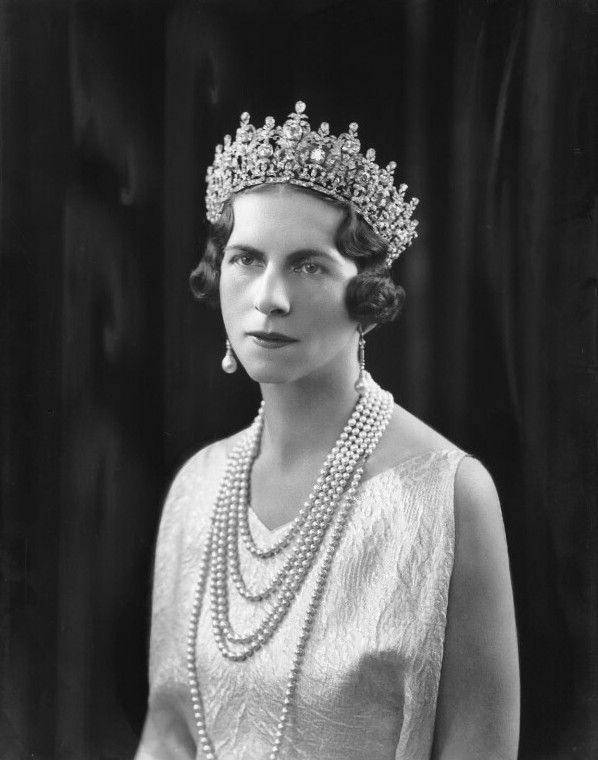
Queen Mother Helen To Be Reburied In Romania Next Month
Queen Mother Helen of Romania will be reburied in Romania next month.
It has been announced by the Romanian Royal Family that Queen Helen, the mother of King Michael, will leave her current resting place at the Bois-de-Vaux Cemetery in Lausanne. A national funeral is planned for the Queen Mother's reburial on 19 October 2019 at the Royal Cathedral of Curtea de Argeș Monastery.
Aged eighty-six, Queen Mother Helen of Romania died at Lausanne on 28 November 1982. Helen is the only queen of Romania to currently be buried outside of the country.
For further news and articles about Europe's Gotha families, join Eurohistory!