Bayram Cigerli Blog

Bigger İnfo Center and Archive
  • Herşey Dahil Sadece 350 Tl'ye Web Site Sahibi Ol

    Hızlı ve kolay bir şekilde sende web site sahibi olmak istiyorsan tek yapman gereken sitenin aşağısında bulunan iletişim formu üzerinden gerekli bilgileri girmen. Hepsi bu kadar.

  • Web Siteye Reklam Ver

    Sende web sitemize reklam vermek veya ilan vermek istiyorsan. Tek yapman gereken sitenin en altında bulunan yere iletişim bilgilerini girmen yeterli olacaktır. Ekip arkadaşlarımız siziznle iletişime gececektir.

  • Web Sitemizin Yazarı Editörü OL

    Sende kalemine güveniyorsan web sitemizde bir şeyler paylaşmak yazmak istiyorsan siteinin en aşağısında bulunan iletişim formunu kullanarak bizimle iletişime gecebilirisni

Weekend Roundup

  • In the New Republic: Gabriel Rosenberg and Jan Dutkiewicz on the place where the meat industry meets anti-bestiality laws, past and present.
  • Catch this virtual event with Ashley Rubin on her forthcoming book, The Deviant Prison: Philadelphia's Eastern State Penitentiary and the Origins of America's Modern Penal System, 1829-1913: Jan.5 at 6-7pm EST. 
  • The Wiener Library for the Study of the Nazi Era and the Holocaust, at the Sourasky Central Library, Tel Aviv University, has put some of its collections online, including prosecutions for distributing the Protocols of the Elders of Zion and the Nazi Justice Collection, which "contains information on the judiciary in Nazi Germany and hundreds of trial transcripts."  N/t: JQB
  • Brittany Nichole Adams, Special Collections, Digitization, and Archival Services Librarian, Northwestern University is profiled in the Bright Young Librarians series at FineBooks and Collections.
  • ICYMI:  University of Mississippi fires Garrett Felber, a tenure-track assistant professor in the Arch Dalrymple III Department of History, who has studied the American carceral state. (Mississippi Free Press).  Greg Melleuish on Constitutional History in Australia (Telos Press Podcast).
Weekend Roundup is a weekly feature compiled by all the Legal History bloggers.

Fishman on Trollope's Lawyers

James Fishman, Pace University School of Law, has posted A Random Stroll Amongst Anthony Trollope’s Lawyers:

Anthony Trollope (1815-1882) resides in the pantheon of nineteenth century English literature. Overcoming a miserable childhood, he became an official with the post office and is credited with introducing the familiar red mailbox. While working full time in his postal position until 1867, he still managed to publish 47 novels, travel books, biographies, short stories, collections of essays, and articles on various topics. Trollope has been described as the novelist of the ordinary for his realistic description of English society.

Law and legal issues flow through Trollope’s fiction. The legal system held a special importance to him as the skeleton upholding the social and political framework of the country. Over one hundred lawyers appear in his work and eleven of his novels feature trials or hearings. The law intrigued and exasperated him. Along with the lawyers and legal issues he depicts are ideas of the law and legal system that are part of elaborate philosophical and jurisprudential traditions, which he recognized.

This article examines Trollope’s changing attitude toward lawyers. It describes the structure of the Bar in terms of class, status and reputation. Trollope believed the legal system should ensure justice, and those who labored in the law should be the vehicle of that pursuit. Justice for Trollope was the meting out of rewards and punishments as the consequence of a right or wrong decision. However, the law, as he depicted it, was often an impediment to this process, and lawyers were unreliable guides.

Initially Trollope portrayed lawyers critically as caricatures as evinced by such names as Alwinde, O’Blather, Slow & Bidewhile, Haphazard, and Chaffanbrass. He was outraged that barristers (lawyers who appear in court) put loyalty to their clients ahead of the search for truth and justice. The adversary system was flawed as the enactment of laws in accord with the laws of nature assumes an inbuilt moral compass in humans that contains self-evident truths of right and wrong. Trollope felt there was no reason why a right-minded person could not intuitively recognize the truth, so criminal law’s adversary system was unnecessary. The legal system sought not the discovery of the truth but was more interested in aiding the guilty defendant to escape punishment. Another grievance was that cross examination in a trial submitted honest witnesses to torture and distracted them from testifying as to the truth.

As he matured as a writer and achieved success, Trollope’s understanding and appreciation of the legal profession changed. He met and become friends with leaders of the Bar, and they influenced his descriptions of lawyers, who became realistic and often admirable human beings. Beyond the legal problems of its characters, Trollope’s later novels incorporated the social, political, and jurisprudential issues of the times and engaged the Victorian legal culture in a broader sense of history, traditions, continuity and change.

Trollope’s attention to the faults of the adversary system had its source in principles of natural law, which posited that God-given universal axioms of right and wrong gave individual guidance or a map for reaching the right result in a legal controversy. Natural law principles were challenged during the Victorian era by positivist notions that law is what the statute books say, and legislators enact. These divisions lurk in the background of his later portraits of lawyers and the legal system. In his later period Trollope created a realistic characterization of the legal profession at the time that offered universal insights into human nature.

--Dan Ernst

Bourbon-Two Sicilies Scion Weds Spanish Duchess


Thanks to the research of royal genealogist (and our dear friend) Hein Bruins, it has become known that Don Rodrigo Moreno y Borbón-Dos Sicilias and Doña Casilda Ghisla Guerrero-Burgos y Fernández de Córdoba, XXI Duquesa de Cardona, were married in 2020.

Infanta Alicia of Spain, Dowager Duchess of Calabria, and her grandson Don Rodrigo Moreno y de Borbón attend the wedding of the Prince of Asturias in 2004.
Photograph (c) Julián de Domingo.
Rodrigo's maternal grandfather:
HRH Infante Alfonso of Spain, Duke of Calabria.

Born in 1962, Rodrigo Moreno y Borbón-Dos Sicilias is the eldest of the seven children of Don Iñigo Moreno y Arteaga (b.1934), Marqués de Laserna, and his wife Princess Teresa of Bourbon-Two Sicilies (b.1937). Rodrigo's paternal grandparents are Don Francisco de Asís Moreno y de Herrera (1909-1979), Conde de Los Andes, and his wife Doña Maria Teresa de Jesús de Arteaga y Falguera (d.1962), Marquesa de La Eliseda. Rodrigo's maternal grandparents are Infante Alfonso of Spain (1901-1964), Duke of Calabria, and his wife Princess Alice of Bourbon-Parma (1917-2017). Rodrigo's first cousin is Prince Pedro of Bourbon-Two Sicilies, Duke of Calabria. Rodrigo Moreno y de Borbón is a great-great grandson of King Alfonso XII of Spain (1857-1885) and his wife Queen Maria Cristina (1858-1929; née Archduchess of Austria).


The Duchess of Cardona stands next to Princess Cristina of the Two Sicilies while the duchess is named by the Duke of Calabria as the the Patroness of the Royal Delegation in the Principality of Catalonia of the Sacred and Military Constantinian Order of St. George (2019).
Photograph courtesy of the Sacra y Militar Orden Constantiniana de San Jorge.
Casilda Ghisla's maternal grandfather:
HE Don Luis Jesús Fernández de Córdoba y Salabert, XVII Duque de Medinaceli.

Born in 1981, Casilda Ghisla Guerrero-Burgos y Fernández de Córdoba is the only child of the late Doña Casilda Fernández de Córdoba y Rey (1941-1998), Duquesa de Cardona, and her second husband Don Antonio Guerrero Burgos (1924-1984). At her baptism in October 1981, Casilda Ghisla had Doña Angela Téllez-Girón y Duque de Estrada, XVI Duquesa de Osuna, and Don Francesco Guerrero Burgos stand as her godparents. Casilda Ghisla's maternal grandparents are Don Luis Jesús Fernández de Córdoba y Salabert (1880-1956), XVII Duque de Medinaceli, and his second wife Doña María de la Concepción Rey de Pablo Blanco (d.1971). The Duchess of Cardona was previously married to Emilio Prieto y Reina; from this marriage she has one daughter, Doña Casilda Prieto y Guerrero-Burgos. The Duchess of Cardona's maternal aunt was the well-known Doña Victoria Eugenia Fernández de Córdoba y Fernández de Henestrosa (1917-2013), XVIII Duquesa de Medinaceli, who counted among her children-in-law a Prince zu Hohenlohe-Langenburg and a Princess of Orléans-Bragança.

_____________________________________________

Don Rodrigo Moreno y Borbón-Dos Sicilias and Doña Casilda Ghisla Guerrero-Burgos y Fernández de Córdoba, Duquesa de Cardona, are fourth cousins. The couple both descend from Don Andrés Avelino de Arteaga y Carvajal Vargas (1807-1850), marqués de Valmediano, and his wife Doña Fernanda María de Silva-Bazán y Téllez-Girón (1808-1879).


Quiroga-Villamarín on the Material Turn in the History of International Law

Gated, but very interesting: Beyond Texts? Towards a Material Turn in the Theory and History of International Law, by Daniel Ricardo Quiroga-Villamarín, in the Journal of the History of International Law, from a master’s thesis on Shipping Containers, Materiality, and Legal History:

While the history of international law has been mainly dominated by intellectual history, the neighboring humanities and social sciences have witnessed a ‘material turn.’ Influenced by the new materialisms, historians, sociologists, and anthropologists have highlighted the role of objects and nonhuman infrastructures in the making of the social. Law, however, has been conspicuously absent from these discussions. Only until recently, things began to be studied as instruments of – global – regulation. In this article, I trace an intellectual history of the intellectual history of international law, contextualizing it since its inception in the so-called ‘Cambridge School’ to its spread into the legal field via the Critical Legal Studies movement and its final import into international law in the last two decades. I conclude arguing that international legal historians can depart from the ‘well-worn paths’ of intellectual and conceptual history to engage with the materiality (past, present, and future) of global governance.
–Dan Ernst

The 101st Birthday of Princess Marie-Louise of Croÿ, Aunt of the Duke of Croÿ

Princess Marie-Luise von Croÿ in 1941.

Her Serene Highness Princess Marie-Luise (Louise) Natalie Engelberta Ludmilla von Croÿ was born at Dülmen on 18 December 1919. The princess was the third child and second daughter of Duke Karl Rudolf of Croÿ (1889-1974) and his first wife Nancy Leishman (1894-1983). She joined an older brother and sister: Duke Karl of Croÿ (1914-2011; married Princess Gabrielle of Bavaria) and Princess Antoinette (1915-2011). Marie-Louise's father was married to Helen Lewis (1898-1976) from 1922-1931. In 1933, Duke Karl married Marie Louise Wiesner (1904-1945); they produced Marie-Louise's only half-sibling: Prince Clemens von Croÿ (1934-2013). Marie-Louise's mother Nancy later married Markus Andreas d'Oldenberg (1877-1939).

Richard Metz.

On 11 March 1941 at New York, Princess Marie Louise married Richard Edward Metz (1912-1997). The couple had one child. Their daughter Valerie de Croy Metz was born at New York City on 23 January 1945. Princess Marie Louise and Richard Metz divorced in 1949. Aged eighty-five, Richard passed away on 26 October 1997 in New York.

On 5 May 1972 at Paris, Valerie Croy Metz married Philippe de Boissieu, the son of Victor de Boissieu; this union ended in divorce. In 1976 at New York, Valerie Croy Metz remarried Francesco L. Cottafavi, with whom she had one child: Vittorio Edoardo Cottafavi (b.4 December 1976). Valerie and Francesco eventually divorced. Afterwards, Valerie married John Francis Heisig (1924-2019). Valerie Croy Metz Heisig passed away in the 1990s.

On 14 June 2014 at Camden, Maine, Vittorio Cottafavi married Julia E. Sortwell, the daughter of Edward B. Sortwell and Melinda Szep. Vittorio and Julia have two children: Olivia and Francesco. These are the only great-grandchildren of Princess Marie Louise of Croÿ.

Nelson Slater.

On 27 November 1952, Princess Marie Louise married Horatio Nelson Slater III (1893-1968). The Slaters are an American philanthropic, political, and manufacturing family from Rhode Island, Massachusetts, and Connecticut whose members include the "Father of the American Industrial Revolution," Samuel Slater, a prominent textile tycoon who founded America's first textile mill, Slater Mill (1790), and with his brother John Slater founded Slatersville, Rhode Island in North Smithfield, Rhode Island in 1803, America's first planned mill village. After moving many of their mills to the South from New England, the village of Slater-Marietta, South Carolina, was named after the family. Marie Louise of Croÿ was widowed on 22 April 1968 when her husband Nelson died at Lausanne, Switzerland, at the age of seventy-four.

Frederick Baldwin Adams Jr. with his mother Ellen Walters Delano Adams.

Thirdly, on 23 July 1969, Princess Marie Louise married Frederick Baldwin Adams Jr. (1910-2001), the son of Frederick Baldwin Adams (1878-1961) and Ellen Walters Delano (1884-1976). Mr. Adams, a first cousin once removed of Franklin D. Roosevelt through his mother, was the director of the Pierpont Morgan Library from 1948 until 1969, when he and Marie-Louise moved to Paris.

Princess Marie Louise of Croÿ still lives in France.

Happy Birthday Princess!

Min Su Kim

Min Su Kim

Modeling Fall 2020


Paul Lambrino - Who Is in Portugal - Has Been Sentenced to Prison in Romania

The High Court of Cassation and Justice has sentenced Paul Lambrino (aka "Paul Philippe Hohenzollern" and aka "Paul al Romaniei") to three years and four months in prison due to influence buying, money laundering and complicity to abuse of office. The sentence is final and enforceable; it cannot be appealed. The sentence is in connection with a corruption case to which Mr Lambrino and twenty-one other defendants are tied. According to DNA (National Anticorruption Directorate), the charges against the defendants concern crimes committed between 2006-2013 in various forms of participation, in the interest of obtaining real estate of special value, including the Snagov Forest and Baneasa Royal Farm, the ownership of which was illegally claimed by Paul Lambrino. Mr Lambrino had worked with others to develop these properties, and outlandish profits were promised to investors in the scheme. 


When the police arrived at the Lambrino residence in Bucharest at 9:32pm this evening, they did not find Paul there. According to his wife Lia, Mr Lambrino is in Portugal. Lia Lambrino spoke to police for only fifteen minutes and did not answer questions from reporters ... though she did tell one to move, as his body was blocking the censor to her gate, which she was trying to close. The police left the Lambrino residence at 10:00pm. At 10:15pm, Bucharest police confirmed that they are now in the process of obtaining an arrest warrant for Paul Lambrino. A police spokesperson stated: "Regarding the person sentenced to imprisonment, given that he was not found at home, the prosecution procedure begins. The activity of obtaining an European arrest warrant and of an international search has started."

Within the past few months, Paul Lambrino traveled to Portugal to stake his unfounded claim as the heir to the bulk of the estate of King Carol II of Romania, who died in exile in Portugal in 1953. Although Paul was in Portugal, and his wife Lia stated today he was in that country, some are speculating that Mr Lambrino may now be in Italy.

Born in 1948 at Paris, Paul-Philippe Lambrino is the only child of Mircea Grigore Carol Lambrino (1920-2006; the son of eventual King Carol II of Romania and his first, morganatic wife Zizi Lambrino) and his first wife Hélène Henriette Nagavitzine, known as opera singer Léna Pastor (1925-1998). In 1996, Paul Lambrino married Lia Georgia Triff (b.1949; the ex-wife of American attorney Melvin Belli). The couple have one son, Carol Ferdinand Lambrino (b.2010).

_______________________________

For more information on the background of this case, feel free to read the following articles:

2013: "Prince" Paul of Romania goes to court against Romanian state to recover land from the former Baneasa Royal Farm

2015: Romanian ‘Prince’ arrested in illegal retrocession case

2016: Remus Truica, "Prince" Paul and Dan Andronic, arraigned in “Baneasa Farm” Case

2019: Convictions In Baneasa Farm File: Remus Truica- 4 Years In Prison, Paul Of Romania- 3 Years On Probation, Other 7 Defendants Acquitted

2020: Israeli Billionaire Steinmetz Charged by Romania's Top Court With Bribery

Female Imprimatur: Women in the Lawbook Trade.

[We have the following announcement of an online exhibit at Boston College Law School.  DRE]

Female Imprimatur: Women in the Lawbook Trade.  This exhibit was inspired by the 100th anniversary in August 2020 of the ratification of the 19th Amendment, which granted suffrage to some—though certainly not all—American women. In the summer before the anniversary, Rare Books Curator Laurel Davis, Professor Mary Bilder, and Associate Law Librarian Helen Lacouture went digging into our special collections to find lawbooks with imprints featuring women printers and booksellers.   

More.

Xi Jian Goh

Xi Jian Goh

Photo Shoots 2018 and 2019


Gilhooley on slavery and the Constitution

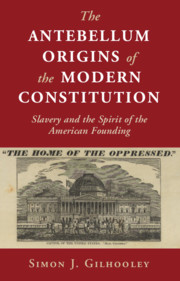
Simon J. Gilhooley (Bard College) has published The Antebellum Origins of the Modern Constitution: Slavery and the Spirit of the American Founding in the series Cambridge Studies on the American Constitution, edited by Maeva Marcus, George Washington University; Melvin I. Urofsky, Virginia Commonwealth University; Mark Tushnet, Harvard Law School; Keith Whittington, Princeton University. From the publisher: 

This book argues that conflicts over slavery and abolition in the early American Republic generated a mode of constitutional interpretation that remains powerful today: the belief that the historical spirit of founding holds authority over the current moment. Simon J. Gilhooley traces how debates around the existence of slavery in the District of Columbia gave rise to the articulation of this constitutional interpretation, which constrained the radical potential of the constitutional text. To reconstruct the origins of this interpretation, Gilhooley draws on rich sources that include historical newspapers, pamphlets, and congressional debates. Examining free black activism in the North, Abolitionism in the 1830s, and the evolution of pro-slavery thought, this book shows how in navigating the existence of slavery in the District and the fundamental constitutional issue of the enslaved's personhood, Antebellum opponents of abolition came to promote an enduring but constraining constitutional imaginary.

Praise for the book: 

"Gilhooley gives us a new and profoundly original account of the roots, during the era of slavery, of today's battles over constitutional interpretation. In the process, he reconceives the political legacy of the 1820s and 1830s, scrambles our contemporary assumptions about the ideological meaning of the different theories of the Constitution, and thoroughly dissects the American worship of the founders. This is a terrific book and one to be returned to again and again." -Aziz Rana

"This book is convincing and profound: a real tour de force. Gilhooley is immensely clarifying on points of history, political theory, and legal/constitutional development precisely because he integrates them. His argument that originalism emerged as a response to the exigencies of antebellum debates will be a touchstone for a very long time." -David Waldstreicher

Further information is available here.

--Mitra Sharafi