Bayram Cigerli Blog

Bigger İnfo Center and Archive
  • Herşey Dahil Sadece 350 Tl'ye Web Site Sahibi Ol

    Hızlı ve kolay bir şekilde sende web site sahibi olmak istiyorsan tek yapman gereken sitenin aşağısında bulunan iletişim formu üzerinden gerekli bilgileri girmen. Hepsi bu kadar.

  • Web Siteye Reklam Ver

    Sende web sitemize reklam vermek veya ilan vermek istiyorsan. Tek yapman gereken sitenin en altında bulunan yere iletişim bilgilerini girmen yeterli olacaktır. Ekip arkadaşlarımız siziznle iletişime gececektir.

  • Web Sitemizin Yazarı Editörü OL

    Sende kalemine güveniyorsan web sitemizde bir şeyler paylaşmak yazmak istiyorsan siteinin en aşağısında bulunan iletişim formunu kullanarak bizimle iletişime gecebilirisni

INFORMATION ABOUT MASS GRAVES IN VAROSHI

 Filenews 2 November 2020 - by Frixos Dalitis


Another tragic dimension of the latest developments for the enclosed city of Famagusta is the existence of mass burial sites for Greek Cypriot citizens and soldiers, murdered in cold blood by the Turkish army. As information from the Office of the Commissioner for the Presidency states, this is one aspect that the United Nations should be concerned about.

To date, despite the efforts made through the United Nations, Turkey has refused to grant permits for exhumations as well as to designate landfills, on the grounds that the area is a military zone.

After the latest developments, the myth and narrative of Turkey is being shot down, especially at a time when Erdogan has announced a picnic on his next descent into the region.

According to historical events, the priority of the Turkish troops in August 1974 was to enter the area within the walls where most Turkish Cypriots were located.

After the entry of Turkish troops the majority of Famagusta residents left the city in search of protection in other areas.

In the city remained a number of residents, who did not have the opportunity or did not want to leave their ancestral homes. These included people with disabilities, the elderly and bedridden people who could not move.

After being secured by the Turkish army within the walls of the area, instructions were given and Turkish tanks advanced on the area within the main city of Famagusta. The goal of the Turkish forces was the clearing of the city by its Greek Cypriot inhabitants. As a result, the majority of residents who remained inside the city were killed in cold blood by Turkish troops.

According to United Nations reports, the city's streets were scattered by the bodies of those executed. The United Nations and especially the Swedish contingent responsible for the city of Famagusta proceeded, for health reasons, to some burials of the bodies of Greek Cypriots while other burials were carried out by the Turkish army and turkish Cypriot paramilitary organizations. On a couple of occasions the United Nations informed the families of the dead in 1974.

The massacre in the orchard of Pergiena

After the RIK announced the return of Famagusta residents to their homes, hundreds of residents tried to return to their homes. Outside Famagusta towards Deryneia, in an area called the "Pergiena pervolia", the Turkish army had set up a roadblock to prevent residents from returning to their homes. He proceeded to arrests and mass executions. .

From information published in the Turkish Cypriot press, large mass graves were created in the area, which in 1995 were attacked by the Turkish army and the remains were transferred to other areas.

The United Nations and the Turkish military hold evidence of missing persons burial sites inside the enclosed city of Famagusta, including young children.

Since, for political reasons, Turkey has decided to declassify the region as civilian, both for the United Nations and for the EDA, there is no longer any excuse not to proceed immediately with the identification of burial sites and the exhumations of the remains, in order to put an end to the suffering of the families.

If no immediate exhumations are made, there is a risk that burial sites will be destroyed by various workshops operating in the area and by those that will be active in the future on the basis of Turkish planning.


PAPHOS - A SECOND HANI IS RENOVATED ON FELLAOGLOU STREET

 Filenews 2 November 2020 - by  Dora Christodoulou


The Municipality of Paphos is proceeding with the complete renovation and reuse of Chani located on Fellaoglou Street. On Friday, the tender for the execution of the project was launched with an estimated expenditure of around €125,000 and a duration of three months.

Hani on Fellaoglou Street is one of four Hania that operated in Paphos about 150 years ago in order to serve the traveLlers who spent the night in the city en route to the other provinces.

After the impressive renovation of Ibrahim's Chani and the other projects carried out in the area, the new project of renovation and reuse and the Chania of Fellaoglou Street will contribute even more to the promotion and landscaping of the historic shopping center of Paphos, while giving further momentum to the commercial traffic of the area.


197 NEW CASES - SUNDAY

 Filenews 2 November 2020


197 new positive individuals in the coronavirus were identified today, out of a total of 3,053 laboratory diagnoses, according to an update received by the Epidemiological Surveillance Unit from contracting laboratories.

In today's results, 16 cases are from 978 laboratory tests conducted at the entrance gates; the remaining 181 cases resulted from 2,075 tests conducted in the community; that is, one in 11 tested for a virus-positive diagnostic.

In detail, today's cases emerged as follows:

  • Of 300 samples taken through the process of tracing contacts of already confirmed cases, 81 cases were identified.
  • Of 826 samples taken through a private initiative, 73 cases were identified.
  • Of 130 samples taken from the Microbiological Laboratories of the General Hospitals, 10 cases were detected.
  • Of 978 samples taken as part of a passenger and repatriated check, 16 cases were identified.
  • Of 254 samples taken as part of the control programme for pupils, teachers and school staff, 4 cases were identified.
  • Of 78 samples taken as part of the migrant structure control programme, 4 cases were identified.
  • Of 33 samples taken as part of a sample check carried out by the COP on Associations participating in its competitions, 1 case was identified.
  • Of 250 samples taken as part of a random check on residents of Kyperounta, 8 cases were detected.

In addition, the following laboratory tests were carried out, without the detection of a case:

  • From samples taken under the programme of referrals by Personal Physicians and control of special teams through the Public Health Clinics, 198 laboratory diagnoses were completed, and
  • From samples taken as part of a random check on residents of Chrysochous Town, 6 laboratory tests were carried out.

Therefore, and on the basis of the data so far, the total number of cases amounts to 4,563.

It should be noted that 27 cases from the sampling programme carried out in Kyperounta identified 27 cases from 500 samples taken. In addition to the 27, in the past few days we have had another 12 positive incidents identified by the community and appear to have occurred after a funeral held in the area.

In addition, 26 people tested positive for the SARS-CoV-2 virus are being treated at Famagusta General Hospital, including four in the Increased Care Unit. In addition, five patients are being treated in the Intensive Care Unit at the Nicosia General Hospital, while another eight people are being treated in a COVID-19 ward.

Source: eyenews

Kyle Yongsik Kim

 Kyle Yongsik Kim 

Modeling Summer 2020


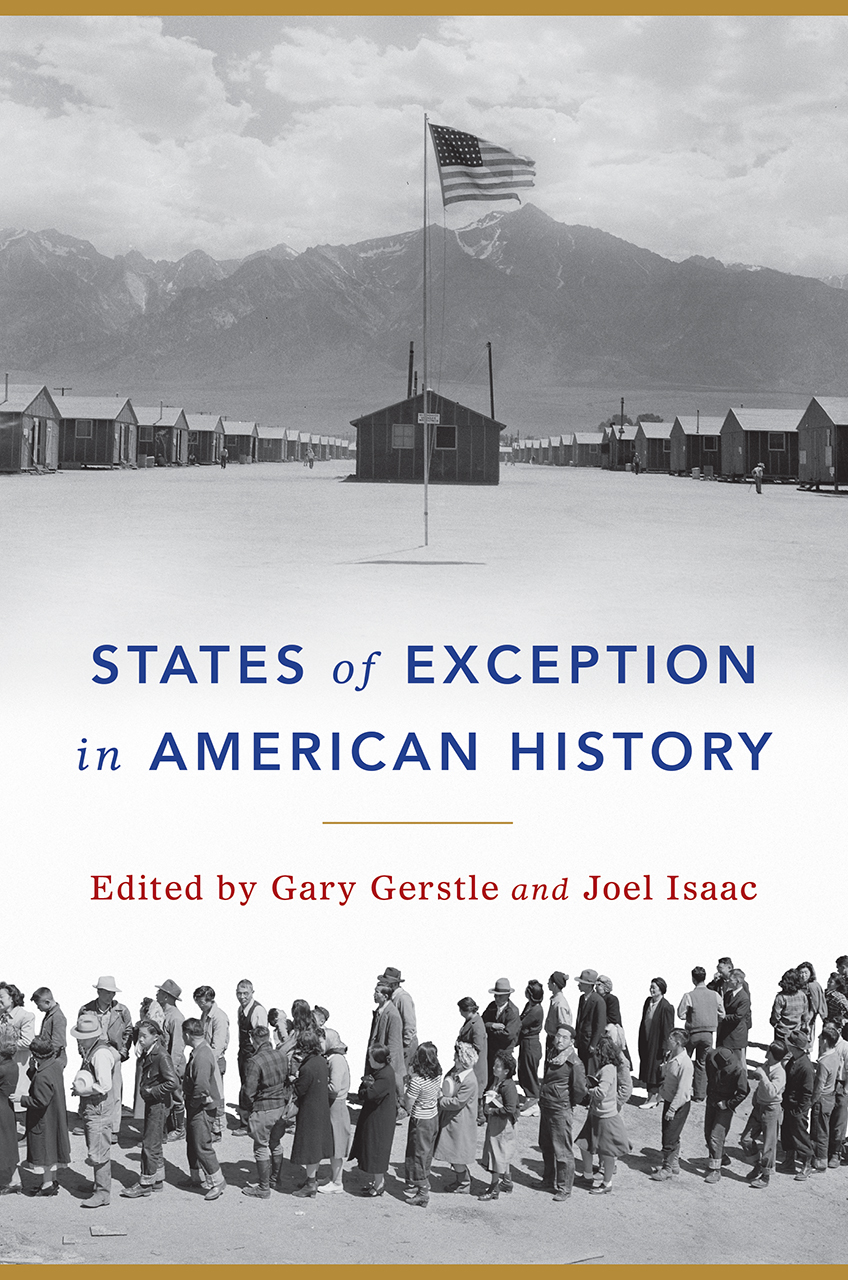
Gerstle & Isaac, eds., "States of Exception in American History"

New from the University of Chicago Press: States of Exception in American History, edited by Gary Gerstle (University of Cambridge) and Joel Isaac (University of Chicago). A description from the Press:

States of Exception in American History brings to light the remarkable number of instances since the Founding in which the protections of the Constitution have been overridden, held in abeyance, or deliberately weakened for certain members of the polity. In the United States, derogations from the rule of law seem to have been a feature of—not a bug in—the constitutional system.

The first comprehensive account of the politics of exceptions and emergencies in the history of the United States, this book weaves together historical studies of moments and spaces of exception with conceptual analyses of emergency, the state of exception, sovereignty, and dictatorship. The Civil War, the Great Depression, and the Cold War figure prominently in the essays; so do Francis Lieber, Frederick Douglass, John Dewey, Clinton Rossiter, and others who explored whether it was possible for the United States to survive states of emergency without losing its democratic way. States of Exception combines political theory and the history of political thought with histories of race and political institutions. It is both inspired by and illuminating of the American experience with constitutional rule in the age of terror and Trump.

Some chapters that are especially likely to interest our readership:

2 Negotiating the Rule of Law: Dilemmas of Security and Liberty Revisited
Ewa Atanassow and Ira Katznelson

4 The American Law of Overruling Necessity: The Exceptional Origins of State Police Power
William J. Novak

5 To Save the Country: Reason and Necessity in Constitutional Emergencies
John Fabian Witt

6 Powers of War in Times of Peace: Emergency Powers in the United States after the End of the Civil War
Gregory P. Downs

9 Constitutional Dictatorship in Twentieth-Century American Political Thought
Joel Isaac

10 Frederick Douglass and Constitutional Emergency: An Homage to the Political Creativity of Abolitionist Activism
Mariah Zeisberg
 
More information is available here.
 
-- Karen Tani

Airport closed


Airport closed


The main airport in Palu, capital of South Sulawesi province, was shut after the tsunami struck and was expected to stay closed for at least 24 hours, complicating any disaster relief efforts.

Friday’s tremor was also felt in the far south of the island in its largest city Makassar and on neighboring Kalimantan, Indonesia’s portion of Borneo island.

The initial quake, which was followed by a series of powerful aftershocks, struck as evening prayers were about to begin in the world’s biggest Muslim majority country on the holiest day of the week, when mosques are especially busy.

Indonesia is one of the most disaster-prone nations on earth.

It lies on the Pacific “Ring of Fire,” where tectonic plates collide and many of the world’s volcanic eruptions and earthquakes occur.

Earlier this year, a series of powerful quakes hit Lombok, killing more than 550 people on the holiday island and neighboring Sumbawa.

Some 1,500 people were injured and about 400,000 residents were displaced after their homes were destroyed.

Indonesia has been hit by a string of other deadly quakes including a devastating 9.1 magnitude tremor that struck off the coast of Sumatra in December 2004.

That Boxing Day quake triggered a tsunami that killed 220,000 throughout the region, including 168,000 in Indonesia.

The disaster was the world’s third biggest quake since 1900, and lifted the ocean floor in some places by 15 meters.

In 2010, about 430 were killed when a 7.8 magnitude quake triggered waves that pound the isolated region of Mentawai, off the coast of Sumatra.

More than 600 were killed in 2006 when another large quake triggered a tsunami off the coast of Indonesia’s most-populous Java island.


Hundreds killed in Indonesia tsunami, with death toll likely to rise


Hundreds killed in Indonesia tsunami, with death toll likely to rise


Officials report at least 384 dead after powerful quake near island of Sulawesi causes waves to sweep away houses

PALU, Indonesia (AFP) — Nearly 400 people were killed when a powerful quake sent a tsunami barreling into the Indonesian island of Sulawesi, officials said Saturday, as hospitals struggled to cope with hundreds of injured and rescuers scrambled to reach the stricken region.

The national disaster agency put the official death toll so far at 384, all of them in the tsunami-struck city of Palu, but warned the toll was likely to rise.
In the city — home to around 350,000 people — partially covered bodies lay on the ground near the shore, the morning after tsunami waves 1.5 meters (five feet) high slammed into the city.

Hospitals were overwhelmed by the influx of injured, with many people being treated in the open air, while other survivors helped to retrieve the remains of those who died.

One man was seen carrying the muddy corpse of a small child.

The tsunami was triggered by a strong quake that brought down buildings and sent locals fleeing for higher ground as a churning wall of water crashed into Palu, where there were widespread power blackouts.

The shallow 7.5 magnitude tremor was more powerful than a series of quakes that killed hundreds on the Indonesian island of Lombok in July and August.

Indonesian president Joko Widodo said the military was being called in to the disaster-struck region to help search-and-rescue teams get to victims and find bodies.

Earlier, the head of the country’s search and rescue agency Muhammad Syaugi told AFP that local staff had found “many” dead bodies.

People living hundreds of kilometers from the epicenter reported feeling the massive shake, which came hours after a smaller jolt killed at least one person in the same part of the country.

The quake hit just off central Sulawesi at a depth of 10 kilometers just before 1100 GMT — early evening in Sulawesi — the US Geological Survey said. Such shallow quakes tend to be more destructive.

Pictures supplied by the disaster agency showed a badly damaged shopping mall in Palu where at least one floor had collapsed onto the story below, while other photographs showed major damage to buildings and large cracks across pavements

The agency also said homes and a local hotel were flattened while a landmark city bridge was destroyed.

A key road into the settlement had been badly damaged and was blocked by landslides, the disaster agency said.

Tsunami Nasıl Korunmalı?

Nasıl Korunmalı?


Deniz kıyısında hissedilen depremden sonra tsunami olma olasılığı her zaman vardır. tsunaminin ilk etkisi deniz suyunun yavaş yavaş bir metre kadar yükselmesi ve çökmesi ile belli olur. Bu dalga sonrakilerin habercisidir. Yıkıcı dalgalardan önce okyanus ya da denizden gelen gök gürültüsü veya uçak sesini andıran bir uğultu duyulabilir. Bu durumda;
-Kıyıdan hemen uzaklaşmak gerekir.
-Teknede bulunanlar kıyıdan uzaklar, açık denizlere giderek dalganın etkisinden kurtulabilir.
-Karadakiler denizden uzaklaşmalıdır.
-Tsunami kıyıdaki meraklıları daha çok vurmaktadır. Meraklılar tsunamiyi izlerken ansızın kendilerini sürüklenirken bulabilirler.
-Tsunami hakkında bilgi sahibi olmak gerekir...

X X

Salınımın tsunamiden farkı;

Salınımın tsunamiden farkı;


Tsunmai; hemen ve 4-5 dalgadan oluşur ve kısa sürede etkisini kaybeder.
Salınım ise daha geç, daha fazla dalgadan oluşur ve daha sonra uzun süre etkilidir.
Tsunamiler oluşum sırasında 3 evreden geçer;

1-Oluşum Evresi: Okyanus tabanındaki yer kabuğu kırılarak deprem oluşur. Bunun sonucunda okyanus ya da deniz suyunun dengesi bozulur ve su kütlesi karıştırılır.
2-Yayılma Evresi: Oluşan dalgalar açık denizlerden kıyılara doğru hızla yayılır.
3-Sel-Tufan Evresi: Karalar, kıyılardaki yerleşim alanları, tesisler, limanlar su altında kalır.
X X

Tsunami nedir? Tsunami nasıl oluşur? >


Tsunami nedir? Tsunami nasıl oluşur?


Bodrum açıklarında meydana gelen deprem sonrasında Kandilli Rasathanesi bölgede tsunami yaşandığını söyledi.

yaşanan deprem felaketi sonrası bölgede tsunami olduğunu açıkladı. Boğaziçi Üniversitesi Kandilli Rasathanesi'nden yapılan açıklamada, "Bodrum deniz seviyesi istasyonunda 10 cm tsunami dalgası ölçülmüştür. Bodrum ve civarı kıyı bölgelerimizde tsunami gözlenmiştir" denildi.  Peki tsunami nedir, nasıl oluşur? İşte detaylar

TSUNAMİ NEDİR?

Tsunami, tarih boyunca can ve mal kaybı konusunda önemli etkileri olan doğal bir afettir.Kıyı bölgelerinde nüfus arttıkça tsunamilerin yol açtığı can kaybı da dünyada artmaktadır. Anadolu çevresindeki denizlerde tarih boyunca tsunamilerin oluştuğu bilinmektedir.

Japonca'da "Liman Dalgası" anlamına gelen "Tsunami" sözcüğü okyanus ya da denizlerin dibinde oluşan deprem, volkan patlaması ve bunlara bağlı çökmesi, zemin kaymaları gibi tektonik olaylar sonucu denize geçen enerji nedeniyle oluşan uzun salınımlı dev deniz dalgasına tsunami denir. 1896 yılında Japonya'da 21000 kişinin ölümüne yol açan Büyük Melji Tsunamisi sonrası dünyaya yaptıkları yardım çağrısı içinde yer alan Tsunami sözcüğü, bu tarihten itibaren dünya dilleri literatürüne girmiştir.

Tsunami, Pasifik Okyanusunda çok sık diğer okyanus ve denizlerde seyrek görülür. Okyanus kabuğunun kırılması sonucu oluşan tsunami, okyanus açıklarında bir insan boyu kadar yüksekliğe ve dalga boyu yüzlerce kilometredir. Tsunami diğer gel-git ya da dalgalarından farkı, su zerreciklerinin sürüklenmesi sonucu hareket kazanmasıdır. Tsunamiden farklı olarak kapalı havzalarda, körfezlerde, göllerde, rüzgar ya da depremlerde oluşan küçük periyotlu dalgalar "salınım" olarak adlandırılır.