Bayram Cigerli Blog

Bigger İnfo Center and Archive
  • Herşey Dahil Sadece 350 Tl'ye Web Site Sahibi Ol

    Hızlı ve kolay bir şekilde sende web site sahibi olmak istiyorsan tek yapman gereken sitenin aşağısında bulunan iletişim formu üzerinden gerekli bilgileri girmen. Hepsi bu kadar.

  • Web Siteye Reklam Ver

    Sende web sitemize reklam vermek veya ilan vermek istiyorsan. Tek yapman gereken sitenin en altında bulunan yere iletişim bilgilerini girmen yeterli olacaktır. Ekip arkadaşlarımız siziznle iletişime gececektir.

  • Web Sitemizin Yazarı Editörü OL

    Sende kalemine güveniyorsan web sitemizde bir şeyler paylaşmak yazmak istiyorsan siteinin en aşağısında bulunan iletişim formunu kullanarak bizimle iletişime gecebilirisni

Liechtenstein: Prince Eugen turns 80!


Earlier this year, on March 20, Prince Eugen of Liechtenstein turned 80 years-old. His family will gather and celebrate his birthday later in June!

Prince Eugen of Liechtenstein with his daughter Anna and her husband
Count Alexander Kottulinsky. (Beware of using these images without permission!)

Prince Eugen was born in Mährisch-Sternberg, an estate owned by his father, Prince Johannes (1910-1975), who married Countess Karoline von Ledebur-Wichelm (1912-1996) at Mariaschein, Bohemia, in November 1936.

Once settled after their marriage, Prince Johannes and Princess Karoline set about building a family of their own. Four children would arrive in due time: Maria Eleonore (1937-2002), Eugen (b. 1939), Abrecht (1940-2017), and Barbara (b. 1942).

From the left: Prince Albrecht, Princess Karoline, Princess Barbara, and Prince Eugen of Liechtenstein. (Beware of using these images without permission!)

From the left: Prince Albrecht, Prince Eugen, Prince Monica (in first communion dress),
Princess Marie (Marizza), and Princess Barbara of Liechtenstein.
(Beware of using these images without permission!)

Princess Marie Eleonore, Prince Albrecht, Princess Karoline holding Princess Barbara,
and Prince Eugen of Liechtenstein.
(Beware of using these images without permission!)

It is worth mentioning that Prince Johannes was the third son and namesake of Prince Johannes (1873-1959) who was married to Countess Marie Andrássy von Czik-Szent-Király u, Krasna-Horka (1886-1961), a lively lady who made the old imperial capital's rumor mill work at full speed. Her granddaughter Princess Barbara of Yugoslavia described her as, "naughty, trouble-prone grandmama!" Interestingly, Prince Johannes Sr. was one of the siblings of Prince Aloys, who married Archduchess Elisabeth of Austria (a half-sister of Archduke Franz Ferdinand of Austria-Este). They in turn were the parents of Prince Franz Joseph II of Liechtenstein, the late father of the current reigning prince, Hans-Adam II. Prince Johannes Jr., therefore, was a first cousin of Prince Franz Joseph II. Coincidentally, and increasing the proximity of Prince Johannes Jr.'s branch to the senior line of the Liechtenstein dynasty, his wife Princess Karoline's eldest sister, Countess Henriette (1910-2002) married Count Ferdinand Kinsky v. Wchinitz u.Tettau (1907-1969). Their daughter, Marie-Aglaé married Prince Hans-Adam II of Liechtenstein, the principality's current sovereign prince.

Prince Eugen of Liechtenstein, Princess Anna of Liechtenstein, Prince Johannes of Liechtenstein, Princess Valerie and Prince Dushan of Yugoslavia, Princess Barbara of Yugoslavia (née Liechtenstein, Princess Maria Theresia of Liechtenstein (nee Goëß), and Count Alexander Kottulinsky. (Beware of using these images without permission!)

Due to Czechoslovakia falling under Soviet control, the Liechtensteins lost all their property there. Prince Johannes and Princess Karoline were forced to pack just their essentials before heading to Austria with their four children in tow. They embarked on this dangerous trek in a bus that Prince Franz Joseph II had sent to Czechoslovakia to collect expelled relations. The Czech government was brutal and irrational when dealing with many of the old Austro-Hungarian aristocracy. In the end, many of them settled in and around Vaduz, the capital of the family's principality, or around Austria.

Prince Eugen of Liechtenstein and Countess Maria Theresia von Goëß on their wedding day, Ebenthal, 27 July 1968.
(Beware of using these images without permission!)

Prince Eugen of Liechtenstein and Countess Maria Theresia von Goëß on their wedding day, Ebenthal, 27 July 1968. His mother Princess Karoline walking behind them.
(Beware of using these images without permission!)

Prince Eugen of Liechtenstein and Countess Maria Theresia von Goëß on their wedding day, Ebenthal, 27 July 1968.
(Beware of using these images without permission!)

Prince Eugen of Liechtenstein and Countess Maria Theresia von Goëß on their wedding day, Ebenthal, 27 July 1968, with Prince Johannes Jr. and Princess Barbara of Liechtenstein.
(Beware of using these images without permission!)

Prince Eugen of Liechtenstein and Countess Maria Theresia von Goëß on their wedding day, Ebenthal, 27 July 1968.
(Beware of using these images without permission!)

After obtaining a degree in forestry engineering in Vienna, it came time for Prince Eugen of Liechtenstein to find a spouse. He chose Countess Maria Theresia von Goëß. Born in Ebenthal, Austria, in May 1945, as the first child of Count Leopold-Zeno von Goëß and of his wife Countess Theodora (Dora) Kottulinsky, a first cousin of the late Countess of Paris, Isabelle d'Orléans-Bragança. In fact, Dora Kottulinsky's father was born Count Karl Kunata Dobrzensky v.Dobrzenicz, but assumed the title of Count Kottulinsky von Kottulin und Dobrzenicz in 1905 after being adopted by his aunt Theodora, Countess Kottulinsky v. Kottulin. Count Karl Kunata was married to Countess Maria Theresia von Meran, a Habsburg descendant. The Kottulinskys owned a vast estate named Chotebor, a property located southeast of Prague. Needless to mention, all these estates were lost when Czechoslovakia fell behind the Iron Curtain.

Prince Eugen married Countess Marie Theresia in Ebenthal, Austria, in July 1968. The couple had four children: Johannes (b. 1969), married to Countess Kinga Károlyi de Nagy-Károly (b. 1973); Anna (b. 1970), who married her second cousin Count Alexander Kottulinsky (b. 1967); Marie (b. 1974), married to Count Ferdinand v.u.zu Trauttmansdorf-Weinsberg (b. 1970); and Sophie (b. 1984), married to Count Clemens Hoyos (b. 1981). Their children have provided Prince Eugen and his wife more than a dozen grandchildren, with yet another grandchild on the way.

Prince Eugen and Princess Maria Theresia of Liechtenstein.
(Beware of using these images without permission!)

As his father had lost all property in Czechoslovakia, Prince Eugen and his siblings had to build their own lives. Eugen worked for a forestry conglomerate, Stanley Bostich, for more than 40 years. When not at work, he could be found hunting, his true and real passion. "If he could, my brother would hunt every day...he is a great shot and simply loves the sport," remembers his sister Princess Barbara. "He hunts, travels, spends time with his children...they form a loving family circle, loves the grandchildren as well...can you imagine, his children all married wonderfully, something that doesn't often happen nowadays, and they are all so loving, specially to their old aunt."

Prince Eugen of Liechtenstein at the wedding of his sister Princess Barbara to
Prince Alexander of Yugoslavia.
(Beware of using these images without permission!)

Prince Eugen of Liechtenstein at the wedding of his sister Princess Barbara to
Prince Alexander of Yugoslavia.
(Beware of using these images without permission!)

Prince Alexander of Yugoslavia and Princess Barbara of Liechtenstein at their civil wedding
in Paris, November 1973. To Princess Barbara's left are Prince Emanuel, Prince Eugen and his father Prince Johannes of Liechtenstein Jr., who is holding a walking stick.
(Beware of using these images without permission!)

Of the three siblings of Prince Eugen one remained unmarried, while the younger married: Princess Maria Eleonore was unmarried; Prince Albrecht married morganatically Tamara Nyman, who was created Baroness von Landskron (div. 1971) https://eurohistoryjournal.blogspot.com/2019/06/throw-back-thursday-marriage-in-las.html ; and Barbara, who in 1973 married Prince Alexander of Yugoslavia (1924-2016).

Prince Eugen, Princess Barbara, and Prince Albrecht, Moosburg, 2009.
(Beware of using these images without permission!)

Prince Michel, Princess Valerie, Prince Dushan, Princess Barbara, Crown Prince Alexander, and Crown Princess Katherine of Yugoslavia; Princess Maria Theresia and Prince Eugen of Liechtenstein; Princess Danica and Prince Philip of Yugoslavia, Topola, Serbia, 2019.
(Beware of using these images without permission!)


For more on the Royal Families of Europe, please subscribe to ERHJ by clicking on the link:


Lorem ipsum dolor sit amet, consectetur adipiscing elit.

Lorem ipsum dolor sit amet, consectetur adipiscing elit. Donec facilisis leo et bibendum pretium. Suspendisse ligula neque, ultrices nec interdum faucibus, pharetra et libero. Vestibulum viverra molestie nunc. Sed quis aliquet leo. In vel posuere tortor. Donec eros turpis, dictum vel vehicula viverra, facilisis in mauris. Nullam rhoncus enim ligula, sit amet suscipit turpis dignissim non. Proin consequat purus sit amet blandit sollicitudin. Aliquam in consequat libero. Morbi sollicitudin dignissim erat laoreet interdum. Phasellus magna velit, consectetur iaculis tincidunt placerat, semper non sem. Mauris in eleifend libero. Mauris vitae nibh sed felis aliquet dictum sed egestas mauris. Sed varius est ac nulla eleifend sagittis. Praesent id aliquam eros, in semper est. Maecenas ex enim, ornare ac auctor sit amet, interdum et justo. Aenean pellentesque magna ut nibh lobortis, sit amet vulputate sem tristique. Ut ac ultrices lectus, id volutpat nisi. Aenean ipsum augue, mollis at sodales mollis, varius eu erat. Fusce accumsan rhoncus risus non feugiat. Lorem ipsum dolor sit amet, consectetur adipiscing elit. Donec facilisis leo et bibendum pretium. Suspendisse ligula neque, ultrices nec interdum faucibus, pharetra et libero. Vestibulum viverra molestie nunc. Sed quis aliquet leo. In vel posuere tortor. Donec eros turpis, dictum vel vehicula viverra, facilisis in mauris. Nullam rhoncus enim ligula, sit amet suscipit turpis dignissim non.
Proin consequat purus sit amet blandit sollicitudin. Aliquam in consequat libero. Morbi sollicitudin dignissim erat laoreet interdum. Phasellus magna velit, consectetur iaculis tincidunt placerat, semper non sem. Mauris in eleifend libero. Mauris vitae nibh sed felis aliquet dictum sed egestas mauris. Sed varius est ac nulla eleifend sagittis. Praesent id aliquam eros, in semper est. Maecenas ex enim, ornare ac auctor sit amet, interdum et justo.
Aenean pellentesque magna ut nibh lobortis, sit amet vulputate sem tristique. Ut ac ultrices lectus, id volutpat nisi. Aenean ipsum augue, mollis at sodales mollis, varius eu erat. Fusce accumsan rhoncus risus non feugiat. Lorem ipsum dolor sit amet, consectetur adipiscing elit. Donec facilisis leo et bibendum pretium. Suspendisse ligula neque, ultrices nec interdum faucibus, pharetra et libero. Vestibulum viverra molestie nunc. Sed quis aliquet leo. In vel posuere tortor. Donec eros turpis, dictum vel vehicula viverra, facilisis in mauris. Nullam rhoncus enim ligula, sit amet suscipit turpis dignissim non. Proin consequat purus sit amet blandit sollicitudin. Aliquam in consequat libero. Morbi sollicitudin dignissim erat laoreet interdum. Phasellus magna velit, consectetur iaculis tincidunt placerat, semper non sem. Mauris in eleifend libero. Mauris vitae nibh sed felis aliquet dictum sed egestas mauris. Sed varius est ac nulla eleifend sagittis. Praesent id aliquam eros, in semper est. Maecenas ex enim, ornare ac auctor sit amet, interdum et justo. Aenean pellentesque magna ut nibh lobortis, sit amet vulputate sem tristique. Ut ac ultrices lectus, id volutpat nisi. Aenean ipsum augue, mollis at sodales mollis, varius eu erat. Fusce accumsan rhoncus risus non feugiat.

The Levi McCormick House

The Levi McCormick House
Back in 2012, I wrote a post about the Randolph Peters Nurseries, located on the western end of Mill Creek Hundred. I now want to revisit not Peters, but the house shown here and on that post, which at the time I very hesitantly said might have been his. Thanks to inquiries from the current owner of this beautiful home and much better information available this time, I can now unequivocally state that this was not Randolph Peters' home, although it was in his family for a short time.

This is what I've chosen to call the Levi McCormick House, although the history of the land (and almost certainly of the house) goes back much further than McCormick's arrival in 1879. The farm was originally part of a larger tract that extended all the way up to Possum Park Road, but was down to about 105 acres by the time Nivin Caldwell acquired it sometime before 1777. Caldwell died in 1787, and in 1795 his widow Agnes sold a tract of about 72 acres to another widow, Mary Black. The farm was approximately the shaded area seen below, located east of Newark and on the north bank of White Clay Creek.

Approximate outline of the 72 acres sold to Mary Black in 1795

Mary Black was the widow of James Black, a prominent farmer, miller, and civic personality in the area. The Caldwell and Black families were obviously close, as James was one of the witnesses to Nivin Caldwell's 1787 will. Mary Black undoubtedly rented out the farm for the 15 years she owned it, until she sold to a member of another soon-to-be prominent family. In February 1810, the 72+ acre farm was purchased by Pennsylvania-born Isaac Jeanes. Isaac was the brother of Abel Jeanes, who along with brother-in-law David Eastburn began the lime business a short distance north. Isaac and Abel's sister Elizabeth married David Eastburn, and was the matriarch of the Eastburns of Mill Creek Hundred.

Isaac farmed the property until his death in 1830, and his widow Sarah remained until her own passing in 1856. By 1864, the only heirs still in the area seemed to be the children of daughter Eliza Jeanes, who had married Thomas Bradley. The Bradley kids sold to one of their own (Francis), who sold the farm out of the family a couple months later. The identity of the next buyer brings us back to where we started, and allows me to clear up the confusion from the earlier post. The next owner of Isaac Jeanes' farm was William M. Peters, the son of Randolph Peters.

Whether the purchase was part of expanding the nursery operation, or if William was farming (or having someone farm) on his own, I don't know. What is clear, however, is that the two houses shown on the 1868 map for Randolph are noticeably west of the one owned at the time by William. (There is one more Randolph house further west which wasn't part of the confusion. Also, this map shows William's house after the bend in the road, when it should have been just before it. All other maps show it correctly.) The lower illustration below shows the location of William's home (the McCormick House) and the approximate locations of the now-lost Peters houses.

The area in 1868

Locations of two of Randolph Peters' houses, and of the Levi McCormick House

Now that that's straightened out, we can move on. And speaking of moving on, so did William Peters. But before he did, apparently his money did, too, because in March 1874 the tract was sold at a sheriff's sale to Mansel Tweed. (The debt that prompted the sale, incidentally, was to the same Francis Bradley he purchased from, so it was probably a mortgage debt.) Mansel Tweed probably used this as a rental farm, or if he didn't at first, he soon did. Mansel's father, John Tweed, died in 1875. If Mansel wasn't already running the family's mill on White Clay Creek above Newark, he soon would be. Consequently, in March 1879, Tweed sold the property to the man for whom I've decided to name the house -- Levi McCormick.

Sgt. Levi McCormick

Levi McCormick (1827-1906) was the son of Lewis and Ann Zebly McCormick, and grew up in the area around Corner Ketch. He served as a sergeant in the 4th Regiment Delaware Volunteers, Company E in the Civil War. His neighbors growing up were the Tweeds -- John's father Robert owned the farm next door. In 1853 Levi married Tamar Worrall, and the couple would have seven children, five of whom survived into adulthood. They lived first on or near Levi's home farm in Corner Ketch, then I think they lived for a time on Tamar's father Joseph's farm on Polly Drummond Hill Road. But in 1879 they moved to the farm down by the White Clay.

Inscriptions in the attic of the Levi McCormick House, both sons of former owners

There's no question that the house that stands now along Old Paper Mill Road is the house that the McCormicks moved into in '79. The photo above is of plaster on the chimney in the attic of the rear addition to the house. The inscription in the upper left is "J W M 1881". This would be Joseph Worrall McCormick, Levi's oldest child. I think it means that they built this addition just a couple years after they moved in, although it's possible that they only redid the plaster. The main fieldstone section of the house has not yet been definitively dated, but I think it's quite possible judging from the style that it could go back as far as Nivin Caldwell prior to the Revolution.

In addition to his farming, Levi McCormick kept himself involved in the community in other ways, too. He was a member of the Grand Army of the Republic (G.A.R.), a fraternal organization comprised of Union Army veterans. In 1881, he helped set up Post No. 9 G.A.R. at the Mermaid Tavern. He was even injured in the war, at the Battle of Globe Tavern in August 1864. He came home with a minie ball in his arm, and a family story says that years later his grandkids could feel and push the projectile around. In 1882, Levi was a candidate for Levy Court for the Greenback Labor Party. The Greenback Labor Party was an early populist and progressive party, which ran on a platform of anti-monopolism, currency reform, and labor rights. Since the newspaper article announcing their local slate is sub-headed "They Show Their Nerve by Placing a County Ticket in the Field", you can guess that he was not successful in his foray into politics.

Left to right: Deborah McCormick Hobson, Tamar Worrall McCormick,
Mary Louise McCormick Murray

After Levi's death in 1906, eldest son Joseph (and his wife and son) remained on the farm, along with Tamar. After Tamar's passing in 1913, it was time to sell the property out of the family, but not out of the area. The man listed immediately after the McCormicks in the 1910 Census was a 43-year old bank cashier named James David Jaquette, and it was to him that they sold the now 75 acre farm. Jaquette grew up on his father's farm near Milford Crossroads, on the fantastically-named Possum Hollow Road. He graduated from Delaware College (now UD) in 1889, and according to his obituary was an noted educator around the turn of the century.

Jaquette worked for a bank in Newark when he bought the McCormick Farm, but since the 1920 Census lists him as a farmer, it seems like he had a career change, at least for a while. By 1930, perhaps due to his age (63), Jaquette was back in the banking industry. James David Jaquette died in April 1949, and a year later his children sold a little more than 11 acres of the tract to Robert and Joan Woodruff. (Incidentally, the "ACJ 1925" part of the inscription shown earlier was for Amos Campbell Jaquette, the youngest of the Jaquette sons.)

Approximately the 11 acres sold to the Woodruffs, now the McCormick House and Paper Mill Falls

The Woodruffs stayed for a while, then the house was owned by the Anderson family in the 1950's and 60's. In the 1970's, when the Ayers family owned the property, they held dances and social events in the large stone barn that stood on the east side of the house. When the property was purchased by a developer in the late 1990's, the stone barn was demolished, but thankfully the house was spared. The home's current owner, Drew Pettingill, has given great care to the house, as well as doing research into its history. Interestingly enough, this is not Drew's first experience with a historic MCH home. For much of his life, his family rented the Cox-Mitchell House (Ocasson) in Hockessin, giving him a true appreciation for older houses. Research into the precise age of the house is still ongoing, but whether it turns out to be 150, 200, or 250 years old, the future of the Levi McCormick House looks bright.

My Film Festival Dilemma

Peter Cushing in "The Hound of the Baskervilles"

Since I am a fan of Basil Rathbone as Sherlock Holmes, it’s no surprise that the first film festival I’m putting together for the Tankerville Club of Cincinnati will feature a Rathbone film. But it won’t be The Hound of the Baskervilles. Although I think that was his best outing in the role, it’s too familiar.

The Hound will be well represented instead by the one starring Peter Cushing, the first Holmes movie in color. And colorful it is – a Hammer horror flick, and a good one. But for Rathbone, I picked The Adventures of Sherlock Holmes. It’s not very Canonical, but the plot is great, Watson is not an imbecile, and the film’s Moriarty shines.

So, the lineup of the five-hour festival, slated for Aug. 24 at Gateway Community & Technical College’s urban campus in Covington, Ky., goes: 
  • Regina Stinson, Sherlockian extraordinaire, speaking on “The Films of Sherlock Holmes”
  • A classic cartoon 
  • The Adventures of Sherlock Holmes
  • A Granada episode with Jeremy Brett 
  • The Hound of Baskervilles
  • An episode of Sherlock Holmes in the 22ndCentury (animated) 

The great dilemma for me is – which Granada episode? I’m torn between “The Red-Headed League,” with that marvelous Moriarty coda at the end, and “The Man with the Twisted Lip,” with that great scene of Holmes smoking all night. Which one would you choose?

EUROHISTORY: Royal House of Bavaria (Volume I) Shipping!

Dear Buyers, Readers, and Friends,

Today, we began shipping copies of our latest book, The Royal House of Bavaria (Volume I).

If you have purchased a copy from us or through AMAZON at https://www.amazon.com/dp/1944207090?ref=myi_title_dp you should be receiving the book by week's end!

Arturo has been busy signing copies!


To purchase the book (for USA clients), you can send us a check in US$ for $56.95, which includes shipping. Mail your check to our address below. if wishing to use your credit card, you can call us.

Paypal is also an option by sending payment to our address there: eurohistory@comcast.net

If you wish to order the book from Canada, Latin America, Australia/New Zealand, Asia, the Middle Was and Africa, we recommend that you use the AMAZON link below!

Again, you can purchase a dopy on AMAZON at:

https://www.amazon.com/dp/1944207090?ref=myi_title_dp

At Hoogstraten:

https://www.hoogstraten.nl


Librairie Galignani also have copies of the book, as does AMAZON.co.uk

https://www.amazon.co.uk/Royal-House-Bavaria-1/dp/1944207090/ref=sr_1_1?keywords=The+royal+house+of+bavaria&qid=1560803284&s=gateway&sr=8-1

Enjoy the reading of our 30th book and let's toast for many more to come!

Eurohistory
6300 Kensington Avenue
East Richmond Heights, CA 94805
USA
Phone: 510-236-1730
Email: aebeeche@mac.com or eurohistory@comcast.net

Top Biceps Exercise - Get Fitness first

Everyone wants to build bigger biceps. But only next time you need to feel in the weight room that their desires are not fulfilled. The one main reasons are that sticking to simple dumbbell biceps curls every time you work out just won’t get the job done.

Your body is very good enough to say what you want to do, so it's great to force your Biceps to push them out of your comfort zone and force them to blow up in development.

Today, there are many exercises to take out every nerve, bulge, and peak in your biceps muscle, and few people who do not include at least one or two of these in their workouts.

What is the most effective bicep exercise?


Incline Inner-Biceps Curl

This practice also spreads the long head of the biceps. The more horizontal the bench during your workout, the longer the long head of the muscles during the rips.


Incline Inner-Biceps Curl exercise


These are great for adding your isolation workout because they actually separate the biceps muscles!

Incline Dumbbell Hammer Curl

Inline bench position biceps increase the stretch on the long head of the muscle and lock your body against the bench so that you can not cheat excess weight during the rips by rocking backward. An added benefit for hammers is that your wrists and elbows are weaker than stress during other curl rips.


Incline Dumbbell Hammer Curl exercise


EZ-Bar Curl

Many people think that EZ-bar curls are the best all-around besides your biceps workout. It impairs both the small and long arms of the biceps muscles and for some people, it is much more comfortable on joints and forehead compared to a straight barbell.


EZ-Bar Curl exercise


Standing Concentration Dumbbell Curl

Concentration curl keeps the arm in the front of the body with a twisted brace and shoulder rotation. Although it reduces the recruitment of long head, it potentially increases the thickness and peak of the biceps by better recruitment of surrounding muscles during your workout.


Standing Concentration Dumbbell Curl exercise


To support your body weight, with your free hand on your off-leg, when you hit failure, you can switch to a hammer hold and burn some additional reps.

Wide-Grip Standing Barbell Curl

This is definitely one of the most common ways to hit this muscle group. By taking a broad-to-normal catch, you start moving on the shoulder externally, so your upper arm changes its position, causing the biceps to attach to the small head of the muscle.

Wide-Grip Standing Barbell Curl exercise


During your workout, you can overload the band, chains, or forcing representative by using a partner, which you can not do very well using only the dumbbell.

Regular-Grip Barbell Curl

Excellent. If you have only made this move in your biceps workout, you will still be out.


Regular-Grip Barbell Curl exercise


Of course, you can play with your grip width, which can reduce the problem that some people experience with Barbell, as well as emphasize a different part of the biceps. A narrow grip will emphasize the long head of the muscle, while a wide hold will emphasize the small head of the muscles.

Zottman Curl

In this movement, you catch a dumbbell in each hand and the way you lose weight, in the same way, the palms hold up (above) and a palm down (pronounced), so there is an injury to the elasticity of your elbow!


Zottman Curl exercise


Some of your elbow flexors also work as a supinator, so instead of curl, the wrist and fore-side rotation will load that function during the curl.

Dumbbell Biceps Curl

A classic too! Dumbbells allow the wrist to move freely, so most people adopt a slight rotation of the wrist and move forward in the form of curls, which thicken the muscles group.


Dumbbell Biceps Curl exercise


You can do the exercise that starts with both palms in front of the torso and then moves the movement forward. On the top of the movement, the palms should be forward and the little finger should be more than the thumb for an extreme contraction.

Overhead Cable Curl

This is a great way to practice double biceps pauses on your front while you train. You can make both cables simultaneously, or alternate between weapons!


Overhead Cable Curl Exercise


To begin, set one weight that is comfortable on each side of the pulley machine.

Stand between the two sides and use an underhand grip (facing palms towards the ceiling) to grab each handle. Your arms should be fully stretched and your feet should be parallel to the floor with the shoulder width apart from each other. Your body should be aligned to handle evenly. This is the starting position.

When breathing, gradually squeeze the biceps on each side until you touch your forefinger and biceps.

Hammer Curl

Normally the hammer will be our strongest curl during a biceps workout. The reason for this is that all the flexors of our elbow are actively involved, and the forearm and wrist are in a state of strength. Doing this movement as a concentration curl or precautionary curl (on a preacher's bench) will reduce the fraud and maximize the recruitment of muscles during exercise.


Hammer Curl Exercise


There are many possible variations for this movement. For example, you can exercise exercises sitting on the back or without a back, and you can do it with alternative weapons; First, raise the right hand for a repetition, then left, then right, etc.

Fat-Grip Hammer Curl

Select two dumbbells, and wrap towels. Another option is to use rubber-grip sleeves. Keeping your upper arms stationary at your sides and your palms facing up, curl the weights.

Fat-Grip Hammer Curl Exercise


Cheat Curl

Choose the most dumbbell you think you can curl and perform, as you had curled the traditional dumbbell, but use the speed up to the power of your hips through the sticking point (half-up, when weights It is most difficult to raise). As soon as you lift, do not bend behind, but rather reach a rhythm where you tilt your torso forward and then complete each of your hips. Close each set of total failure a representative shyly.


Cheat Curl Exercise


Side Curl

Attach them to two bands who face strong objects at the height of the shoulder. Stand among them, and hold one end in each hand. Raise your arms with elbows 90 ° - You should feel some tension on the band in this initial situation. Curl the band toward your ears, and hold the contracted position for two seconds. You can also do this practice with cables.

Suspension Trainer Biceps Curl

Face the suspension point of suspension trainer and face handles with palms. Lie down on your back, straight body, and bend with extended arms in front of you. Curl your body up to the handle. Keep your hips straight - do not twist or turn. If you need to make this practice easy, then increase your feet so that you are in a more honest position; If you want to make it more difficult, then raise your legs slightly forward in front of you.

Suspension Trainer Biceps Curl Exercise

How do I get bigger biceps?


Unless you are underweight, you will never have big weapons. No matter how many biceps you curl. To build bigger arms, consolidate and eat a lot, first increase your overall muscles.

Eat More: You need to eat more calories to gain weight. Most people will need at least 3000kcal / day, more people with sharp metabolism will need more. Start eating at least four meals in a day - breakfast, lunch, dinner, post workout. Eat your meals at every meal.

Get Stronger: Increase your squat to 140kg / 300lb, increase your bench press to 100kg / 220lb and increase your deadlift to 180kg / 400lb. This will increase your overall muscles.

Take Rest: Muscles relax when resting. Pause your arms, they are small muscles. Check Strong Lift 5 × 5: The routine allows for a lot of rest.

Taking right nutrition is best for your health and fitness. Make sure your diet is good for your workouts. This is the key of bodybuilding.

Jun Young Hong

Jun Young Hong
Selfies Spring 2019


The Prince In The Rhine: The Tragic End of Friedrich of Prussia (1911-1966)

The Prince In The Rhine: 
The Tragic End of Friedrich of Prussia (1911-1966)

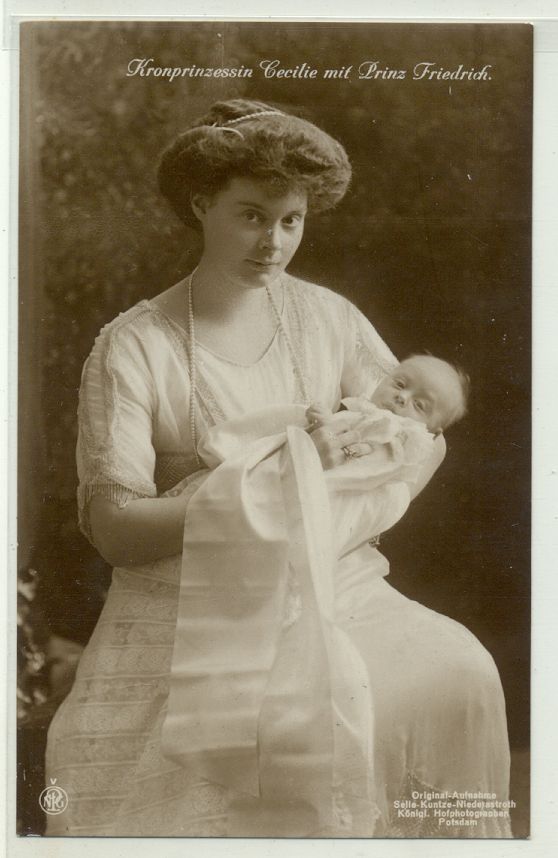
German Crown Princess Cecile with her son Prince Friedrich

The Four Princes of Prussia: (left to right) Friedrich, Hubertus, Louis Ferdinand, and Wilhelm
Prince Friedrich of Prussia in 1922

Born at Berlin on 19 December 1911, Prince Friedrich Georg Wilhelm Christoph of Prussia was the fourth son and child of German Crown Prince Wilhelm and his wife Cecile (née Duchess of Mecklenburg-Schwerin).

Prince Friedrich of Prussia in the 1930s

In 1936, Friedrich attended the funeral of King George V, which took place on 28 January. The prince's future brother-in-law, Sir Henry "Chips" Channon, the husband of Lady Honor Guinness, remarked in his diaries: "Fritzi of Prussia looked very handsome in a white uniform, and the King of Rumania [Carol II] look ridiculous as ever." Later that same year, the Channons paid a visit to Germany from August until September. During their stay, Chips and Honor were invited by Friedrich to visit his mother the Crown Princess. Chips recalled this episode in his diary entry of 10 August 1936:

Yesterday Fritzy rang up to say that his mother, the Crown Princess, expected us to luncheon today, and we wondered what to wear for this royal engagement. 
I thought that grey flannels would be appropriate for lunch in the country anywhere, but, on the whole, we decided black might be more correct and so black it was, with Harold Balfour and I in our House of Commons uniforms, and Honor beautifully dressed in semi-grand 'dayers.' Cecilienhof, which the Imperial Family thinks looks very English, is a dreadful Lutyens sort of house, ugly and bogus Tudor, built just before the war. That it overlooks a lake is its only consolation. Fritzy met us and led us to the water's edge, where we found Princess Cécile, his second sister, an intelligent, half cross-eyed girl of eighteen, bathing with young Lord Jellicoe. The house itself is very royal with plush, palms, bareness, and faded, signed photographs of dead monarchs. Fritzy showed us his mother's bath-cum-dressing room, which she has fitted up as a yacht, to remind her of Kiel, and we were laughing a little, when the door opened and the Crown Princess walked in, large, smiling, and gracious. 'Thank you so much for all your kindness to my child,' she said to the curtseying Honor. She looked very, very royal, with gold, jingling bracelets, large single pearl earrings, simple clothes and a Fabergé brooch. We filed in to luncheon in a large dining room and Honor was between the two princes, I on the right of the Crown Princess. She is indeed very much a Mecklenburg, that is, dark and rather Russian (she is a double first cousin of my adored Princess Nicholas, whose mother, the Grand Duchess Vladimir, was a Mecklenburg). All the Mecklenburgs have a frivolous outlook and are dark, charming and well-bred. Princess Marina, for instance. They all have a habit of talking in a slightly guttural voice, and their catch phrases are 'poor thing,' 'do you find,' and 'it makes me the impression.'
The Duke and Duchess of Sutherland

In May 1937, Prince Friedrich attended a ball hosted by the George and Eileen, Duke and Duchess of Sutherland. Again, we turn to Chips Channon, who, as ever, was present and ready to document his impressions of the evening. On 18 May, Chips took to his diary:

The Sutherlands' Ball. A dazzling night. Honor looked magnificent with all her sapphires, tiara and a resplendent blue brocade number made to match the Amalienburg and we were hardly dressed and down before the brace of young princelings, Ernst August of Hanover, and Fritzy of Prussia, very young, fair and Nordic and dripping with decorations, arrived almost too punctually. Soon after nine we swept into dinner, and the dining room was a gorgeous, glittering sight of jewels shimmering in the candle-light, of Meissen china, of decorations and splendour. Mrs Grenville was delighted to be next to the young Prince of Prussia and there was great stimmung and excitement. At 10.45 Honor and I with Ernst August, jumped into our car, and armed with a special white card we drove to the Royal entrance - rather to everyone's annoyance, at Hampden House. The Ball was the best spectacle so far of the summer; we were ushered into an improved ballroom hung with tapestries, with, at one end, an enormous dais of red baize where all the Royalties of the earth seemed congregated. We had barely arrived when the King and Queen entered with the Sutherlands. All four were gay, smiling and impressive, and I noticed how both the King and Queen have gained greatly in presence and dignity. They went up to the queue of Royalties and greeted them all, kissing many. The Queen was in white, with an ugly spiked tiara, and she showed no sign of her supposed pregnancy, which I am beginning to doubt. The King followed her, showing his teeth. Queen Mary was in icy blue; soon the ball began. Honor and I were dancing near the dais when we caught Queen Mary's eye, and we stopped to curtsey and bow as she held out her hand. Then Honor and I became separated and I danced with Lady Iveagh. Later I danced with Alice Hofmannsthal, and we went up to the dais to talk to Princess Olga who was wearing her mother's ruby parure. We chatted with her for a few minutes, and as we turned we saw the King and Queen coming up to us, and they very smilingly talked to us. Both Alice and I were thrilled, which was unreasonable as we have both known them for years, and at one time intimately.
The remainder of this expanded article is in EUROHISTORY, Issue CXXI – Spring 2019 !

For more on the Royal Families of Europe, please subscribe to ERHJ by clicking on the link: